Showing posts with label Asian Kuehs / Nyonya. Show all posts

30 May 2019

Kuih Talam and Pandan Chiffon Cake


Baked the chiffon cake and Kuih Talam few weeks ago for my LG members. 


Recipe adapted from Kathrine Kwa youtube video
Ingredients: 

Ingredients for bottom layer 10g green peas flour 30g tapioca flour 120g rice flour 130g caster sugar 1/2 tsp salt 300ml pandan juice ( 6 pandan leaves blended with 300ml of water) 200ml thick coconut milk 120ml water 1/2 tsp alkaline water
add a drop of green food colour (option) Ingredients for top layer 50g rice flour 25g tapioca flour 250ml thick coconut milk 1 tsp salt 250ml boiling water

Method:
1. in a mixing bowl, add green peas flour, tapioca flour, rice flour, sugar, salt, pandan juice, thick coconut milk and alkaline water, stir until mix well. Sieve the mixture, add 120ml water to it.
2. Boil the mixture and keep stirring until the mixture slightly thicken, remove from heat and pour into a grease plate, steam for 18 mins in medium heat until the mixture is cooked.
3. In a clean mixing bowl, add rice flour, tapioca flour, coconut milk and salt, stir until mix well. Add hot boiling water. Sieve the coconut mixture and pour on top of the green layer. Let it steam for 18 mins in medium heat until the mixture is cooked.

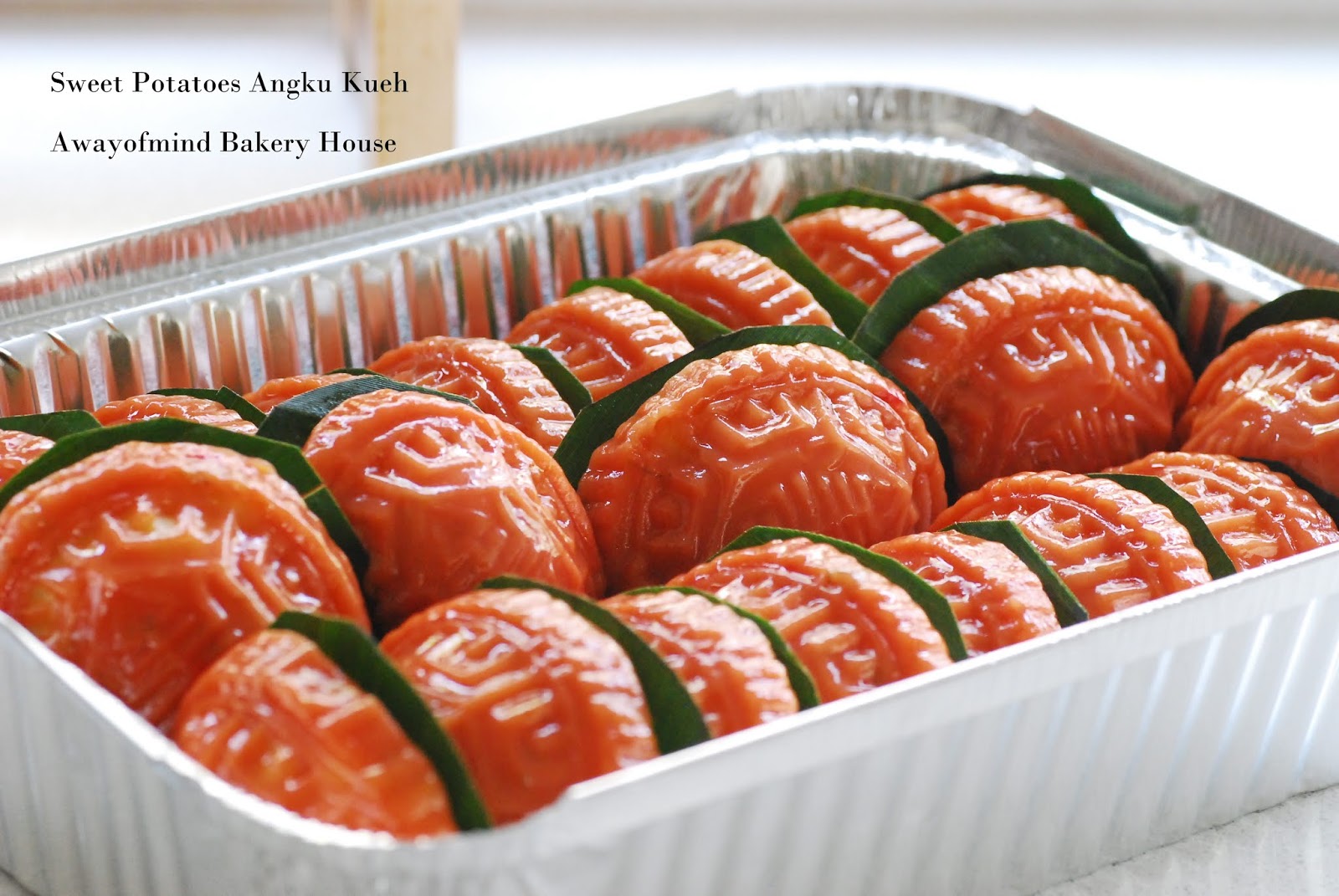
Sweet Potatoes Angku Kueh


Come back to my blog and do something I love and passionate about. I need to wear my reading glass to take the photo nowadays ...which is so inconvenient, if not the focus point will not be right. Using my old recipe for the Angku kueh. 


Ingredients:
Filling:
220g split skinned mung beans (soaked for more than an hour, drain and steam)
120g sugar
150ml pandan juice
1/4 tsp salt
50g cooking oil


Method:
1. Steam the mung beans for about 45 mins, then blend it while hot.
2. Boil 150ml pandan juice, sugar, salt in a wok till boiling.
3. Pour in the blended mung beans and stir fry.
4. Add in oil and fry till the mung beans mixture almost dry and mix well. 
5. Remove from fire and set aside to cool.
6. Divide the mung beans into small balls.

skin dough:
300g sweet potatoes (steamed and mashed)
200g glutinous rice flour
1 tbsp rice flour
2 tbsp sugar
3 tbsp cooking oil
180ml water (gradually add in)
a few drops of red food colouring

some banana leaves, wash, cut into right size to fit the dough

Steps for pastry:
1. Mixed all ingredients by hand.
2. Make into a dough, leave for 20-30 minutes.
3. Grab a portion then wrapped in the filling.
4. Dust the mould and dough with some glutinous rice flour before pressing in the dough.
5. Knock out & place on the cut & greased banana leafs.
6. Brush a bit of oil on top of the cut banana leafs before placing the dough on top.
7. Use a steamer, steam on medium heat for 8-10 minutes.
8. When its done, brush oil on top of each kueh to prevent sticking together.


10 June 2016

Kuih Lapis Legit (Spekkoek) 印尼式千层糕


I baked this Indonesian style Kuih Lapis Legit or multi-layers spice cake two weeks ago, it was not a perfect cake as the distinctive layering are not obvious on some layers, this cake has 15 layers, there were holes between layers too. 

I notice there are many difference recipes used by bakers, put the number of eggs a side, we can category the recipes into two common one. One type of recipe is only using egg yolks and the other one is using egg yolks and egg whites with the ratio 2:1. I'm trying out with the later.


This is a very time consuming bake, you need to spend about two hours plus in front of the oven and the 20 eggs use is not a joke but really high in cholesterol too. However, to whoever would like to take up this challenge, my suggestion is go ahead! The end result is really rewarding, the cake is filled with spice fragrant, moist and very delicious! Anyway, please eat in moderation! The Kueh Lapis Legit is served in thin slice and it can be left out on kitchen top for up to five days time, if you are not going to consume it so soon, you can wrap it up with parchment paper and cling wrap before store it in freezer.    


Recipe from Wen's Delight 
Ingredients A:
500g soft butter
200g condensed milk
2 tbsp rum liquor
150g cake flour
1 tbsp kueh lapis spices (or mixed spices contained ground cinnamon, cardamon, nutmeg, clove and ginger) 
20 egg yolks
100g sugar
2 tbsp SP /Ovalett (option, is a cake stabilizer)

Ingredients B:
10 egg whites
90g sugar

Method: 
1. Preheat oven at 200C with top and bottom heat. (using 8" square tin greasing and lining the base with baking paper)
2. Using electric mixer, cream butter until light, gradually add condensed milk and rum liquor, mix at medium speed for about 5 to 10 mins, until the mixture is fluffy and creamy. Add in the sifted flour and kueh lapis spices. Mix well and set aside.
3. In another electric mixer bowl, whisk egg yolks, sugar and SP at max speed until thick and pale, or until it is ribbon stage. (About 3 to 4 mins, if without SP will need about 10 mins) Gradually add this mixture into butter mixture, mix well. 
4. In a clean bowl, using electric mixer, whisk egg whites until foamy, add sugar in three batches, mix at max speed till medium firm peak.
5. Take 1/3 egg whites out and mix into the egg yolks butter mixture. Mix well. Then continue by folding in the remaining egg whites to egg yolks butter mixture, until all well incorporated.
6. Place the baking tin in middle rack of the preheated oven for 5 mins. Take out the preheated baking tin, scoop a ladle of batter and spread it on the baking tin (always take the same amount of batter), use the back of the ladle spread the batter evenly in the baking tin. The batter melt once it get contact with heat, it will take about 5-7 mins to bake the first layer. Then take out the baking tin, turn the oven to top grill function. Use a metal fondant presser, lightly press and smooth out each layer. If there is bubble on the cake, use a toothpick to break it. 
7. Continue with second layer of batter and grill for 4-5 mins, do the same for remaining batter until finish the batter. 
8. For the last layer of batter, use oven bake function, bake the cake at 180C for 15 mins.
9. Take the cake out from baking tin once it is done. Cool down the cake completely before slicing.

Note:
1. You may have to adjust the oven temperature if the cake brown too fast. You need to cook the cake properly before topping it with another layer of batter. 
2. Place a tray of water inside the bottom of oven if you are using top and bottom heat function, this will prevent burning of the bottom of the cake. 


27 May 2016

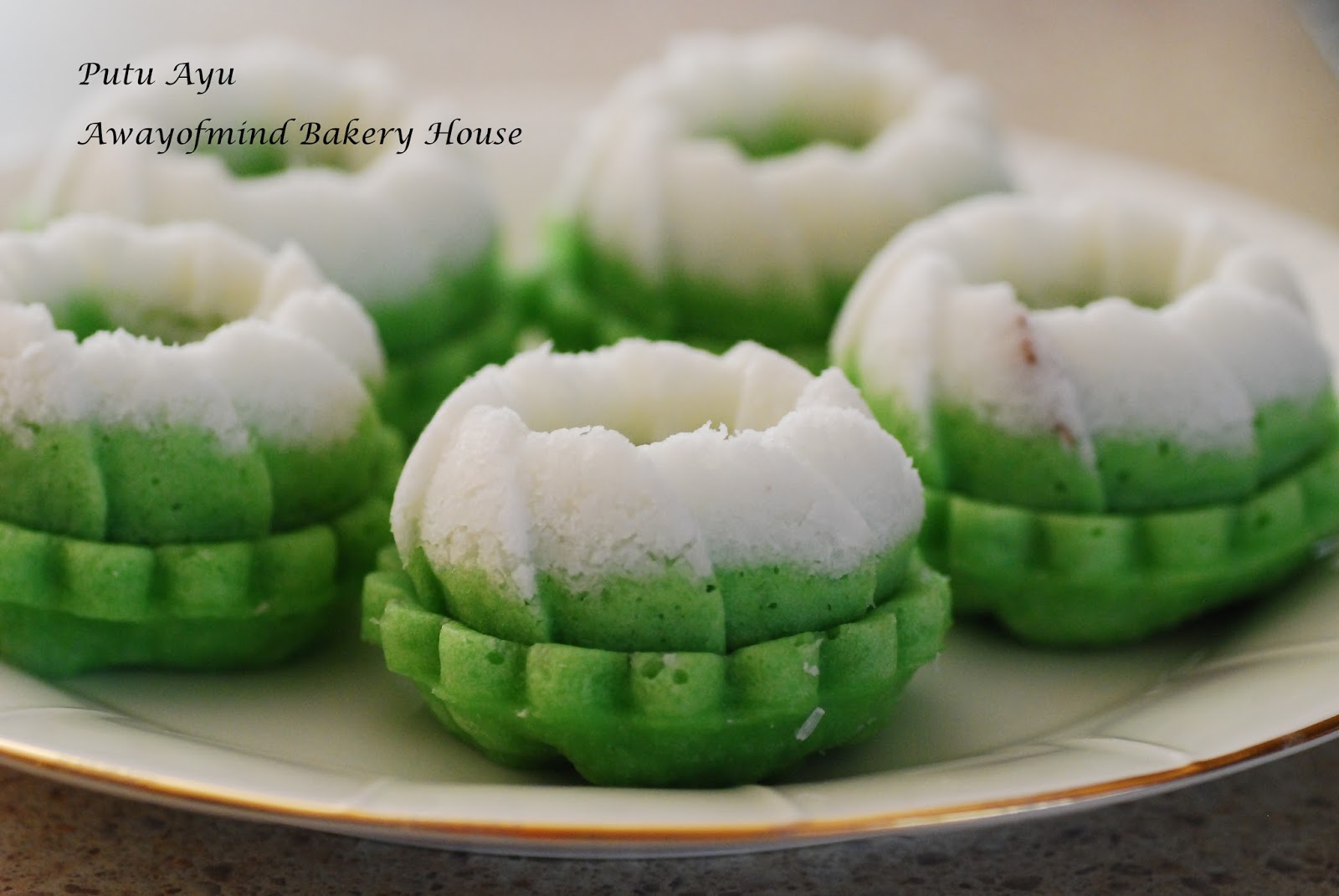
Putu Ayu


Putu Ayu is a kind of Southeast Asia steamed cake with grated coconut on the top layer and coconut milk Screwpine  leaves flavour batter at the bottom layer. It is fast and easy to make, the trick for a successful steamed cake is you have to beat the eggs and sugar until it double its volume. 

Yield 15 pieces  


Ingredients: 

3 eggs
150g sugar
200g plain flour
200ml thick coconut milk
150g freshly grated coconut
1/2 tsp salt
1 tsp pandan paste (Screwpine leaves paste)


Method:
1. Grease the plastic mould with cooking oil. Heat up the steamer.
2. Mix the grated coconut with salt and place it into steamer, steam for 5 mins.
3. Place the steamed grated coconut into the base of the plastic mould, press the grated coconut down using your fingers. 
4. Beat the eggs and sugar with an electric mixer, beat it until creamy and fluffy, or double its volume, about 5-7 mins. Then slowly sieve in the plain flour in batches. Add the thick coconut milk and pandan paste. Continue to mix for another 2 mins. 
5. Bring the water in the steamer to a boil. Scope the batter into individual plastic moulds and place the moulds into the steamer, steam for 15 mins.
6. Dislodge the cake gently by flipping the steamed cake on your palm. 


19 May 2016

Kuih Kosui (Asian Rice Cakes with Screwpine Leaves Flavour)


Today I'm thinking of clearing the left over grated coconut I had for making Ondeh Ondeh. My family members and I love Asian snack very much. What I can think of is making these Kuih Kosui or Asian Rice Cakes to go with the grated coconut! 

As usual, my Kuih Kosui is without alkaline water. This round I'm using pandan paste (Screwpine leaves paste) If you like chewy Asian kuehs, this is one of it that you will enjoy too. 


Reference to Table for 2...or more with changes

Yield: 8 pieces
67g rice flour
33g tapioca starch
100g sugar
300ml water
1/2 tsp pandan paste
some freshly grated coconut with salt

Method:
1. In a small saucepan, add rice flour, tapioca starch, sugar, water and the pandan paste. Stir the mixture well with a whisk, place the saucepan on medium heat, keep stirring using a spatula until the liquid start thickening. (You can see there is translucent paste stick on the spatula) remove the saucepan from heat.

2. Heat up the steamer with 8 empty teacups sitting in the steamer, when the water start boiling, reduce the heat to medium. Using a ladle scoop some mixture into the 8 teacups. Cover the steamer and let it cook for 10-15 mins. 

3. Let the Kuih Kosui cool down completely before dislodge it from the teacups. Serve it together with grated coconut. 


17 May 2016

Ondeh Ondeh (Glutinous Rice Balls with Palm Sugar) 红薯耶丝糥米球


Today I'm making one of my son favourite Asian snack again, Ondeh Ondeh or glutinous rice balls with palm sugar coated with grated coconut. I added mashed golden sweet potato to the dough to achieve the bouncy chewy texture. The texture remain soft bouncy after it turned cold too. 

The tricky part for this snack is to estimate how much water to add into the dough, as there is water content in the mashed golden sweet potato too. 

For Purple Sweet Potato Ondeh Ondeh please refer here


Ingredients:
160g glutinous rice flour
10g tapioca flour
120g golden sweet potato, steam and mash
80-100ml pandan water (boil 200ml water with some pandan leaves)
150g palm sugar, diced
200g freshly grated coconut
1/2 tsp of pandan paste 

Method:
1. Steam the grated coconut with 1/4 tsp salt for 10 mins. set aside.
2. Mix glutinous rice flour, tapioca flour and mashed golden sweet potato together, add pandan paste, gradually add pandan water (pour half, add slowly if requires), knead into a smooth dough. If dough too dry add a little more pandan water or add a little more flour if it is too wet. (This depends on the water content of the sweet potato)
3. Divide dough into small balls, slightly press the dough ball into bowl shape and fill in a small piece of palm sugar in the middle. Seal the dough ball. Repeat for the remaining dough.
4. Bring a pot of water to boil, turn the heat to medium and drop the little dough balls in it. When they float to the surface, let it boil for another 2-3 mins.
5. Remove them with a slotted spoon and shake off excess water.
6. Roll the cooked glutinous balls over the grated coconut. Serve warm.

19 February 2016

Sweet Potatoes Angku Kueh (Red Tortoise Cake) 2016


Try out the new wooden Angku mould using the old recipe. I only reduce the use of food colouring to 2 drops of red. The skin texture for the red tortoise cake is chewy, soft and mung bean texture is smooth and creamy, I leaves it out at the kitchen counter for 3 days, the skin texture still remain soft. 

Yesterday was a great day, at the teacher-parents session we get to meet up with other parents in my son class for the first time, hope that's break through with friendship and everything.


24 June 2015

Kueh Tutu / Putu Piring 嘟嘟糕


Kueh Tutu or Putu Piring or Kue Putu Ayu is a round shaped steamed rice flour cake with shredded coconut and palm sugar/ gula melaka as its filling, but nowadays it has peanuts or even red beans filling too. I have not taste it since young, recently a friend of mine told me it tastes really good, she gamely challenge me to bake-along with her. As I don't have the special Kueh Tutu mold, I used tart mold it seems a great choice to do this work  too! 

Thanks to my friend, this lovely, a bit soft chewy texture of steamed rice flour cake is here. This is my second attempt, the first one came out too dry as I steamed the Kueh Tutu together with the tart mold on. By the way, the rice flour I used is the local brand rice flour.  

Notes:
1. The rice flour mixture has to be wet enough to hold into a rough dough yet able to break into fine crumble. When the flour is put through a sieve, it will turn into very fine powder like in my photo.
2. Transfer of rice flour cake dough from mold to the steamer has to be very careful as I am not using the individual muslin cloth. Some loose rice flour crumble may break off but as long as it still in one piece during steaming, it will come out one piece and not break into crumble in your hands. 
3. If you do it right, the kueh tutu will stay soft and will not turn hard. (I checked my last piece of Kueh Tutu after 4 hours, it stays soft and fluffy)


Recipe adapted from Back To My Kitchen, I made half of the ingredients
Yield: 8 pieces

1 cup of rice flour
80~90ml of water (add gradually)
2~3 pandan leaves, cut into short length
1/2 tsp salt

Filling:
75g dark brown sugar (Cane Sugar)/ gula melaka/ palm sugar
some shredded coconut +1/4 teaspoon salt, steamed

For Serving:
Banana leaves
some shredded coconut + dark brown sugar/ gula melaka/ palm sugar 


Method:
1. Pan fry the rice flour together with pandan leaves without oil for 5 mins. Set aside for cool. Discard the Pandan leaves.
2. Add the salt to rice flour, gradually stir in water, use the finger tips to rub the flour together, it should be able to hold it into rough dough yet able to break it into fine crumble. Add a bit more water if the dough is not able to hold into rough dough. 
3. Sieve the flour, it will turn into fine rice flour powder. 
4. Heat up the steamer, wet a piece of muslin cloth and place it in the steamer
5. Scoop some flour into the Kueh Tutu mold, fill up 1/3 of it. Place a teaspoon of filling over the rice flour then cover it will more rice flour. Level the rice flour in the mold.
6. Gently transfer the Kueh Tutu mold with open side downward to the steamer. Dislodge the mold, leave the Kueh Tutu in the steamer, cover it with wet muslin cloth and steam for 5~6 mins.
7. When it is done, take the Kueh Tutu out from steamer and serve it on banana leave with shredded coconut and sugar. 


16 April 2015

Kuih Dadar / Kuih Ketayap (Sweet Coconut Crepe Roll with Grated Coconut Filling)


So many thing happened during this Easter Holiday, we have experienced our first massive sandstorm ever happened in Qatar which is the one worth record down here. The aftermath sandstorm was bad enough to make many flights delayed, and most of the friends I know have to wash and clean their house for hours! The sad news for the aftermath sandstorm is summer is official here and most of my vegetables in the garden is dying...the only plant that able to survive is the Desert Roses. 

Try out a few new recipes this week, making a few unsuccessful cakes as well. But I am happy to share this successful soft and sweet coconut crepe roll with grated coconut filling in brown sugar with you. Its traditional name is Kuih Dadar (or some call it Kuih Ketayap). I think this is the first snack which I didn't eat when I was young. My parent didn't eat this Kuih Dadar, they have not serve it to us and I come to like this snack because of a lot of food blogger has made it. And one of my friend here made a good Kuih Dadar, I tried and come to like it as well. 

When I search for Kuih Dadar recipe, I found it has some differences, some add glutinous rice flour and oil in the grated coconut filling, I chose not to add glutinous rice flour base on my personal expectation for the taste of the filling. I want to be able to munch on the sweet grated coconut. Just purely the taste of sweet brown sugar and grated coconut is enough to make you like this Asian snack. As for the crepe, I'm making it without using lye water. This recipe produces a nice springy soft and smooth crepe as it has the tapioca flour in it too.  


Recipe adapted from Growing Up in a Nonya Kitchen by Sharon Wee cookbook, p280 with minor changes

Ingredients for filling:
300g gula melaka (Used dark brown muscovado, cane sugar)
2 tbsp white sugar
3 tbsp water
6 pandan leaves, tied into a knot
600g grated coconut

Ingredients for crepe:
230g plain flour
1 tbsp tapioca flour
1 tsp salt
4 eggs, beaten (used 3 eggs)
a few drops pandan essence (screwpine essence)
625g coconut milk (I used about 400g coconut powder, diluted with 350g warm water)
a few drops green food colouring

Method:
1. For Filling: place the brown sugar, white sugar, water and knotted pandan leaves in a pot. Bring to boil for 5 mins, let the sugar dissolve. Turn off the heat, add the grated coconut. Toss and coat the sugar mixture until the coconut absorbed all the sugar mixture. Let it cool, remove the pandan leaves.

2. For Crepe: Combine the plain flour, tapioca flour and salt in a bowl. In another bowl, place the eggs and whisk until it is a bit pale, add the pandan essence, stir well. Add the flour mixture, add the coconut milk. Strain to remove any lumps, whisk well until you get a smooth batter.

3. Set aside batter for 30 mins before frying.

4. For Assemble: Heat a nonstick small frying pan under medium heat, grease with a little cooking oil, and wipe clean with a kitchen tissue. Pour a ladle full of batter and spread across the pan (the batter should not be too much or else the end result will be a thick pancake). Wait until the side of the pancake show a little detaches from the pan, use a butter knife to help flip the pancake over, let the pancake heat up for a second, remove the pancake and set aside. Repeat the process with the remaining batter.

5. Scoop a tablespoon of filling and put it in the middle of a crepe, roll and fold it like making spring roll.  


01 April 2015

Kuih Seri Muka 士丽拇卡蓝花糯米糕


These two weeks has been very tough for many Singaporean. Most of us (Including me a Singapore PR) were sadden by the passing of Singapore's Founding Father the late Mr. Lee Kuan Yew. This great and visionary leader has contributed greatly on the peace of Southeast Asia and help shape the dynamic economic growth in the region, he has leave behind a legacy for Singaporean. Thank you Mr. Lee for everything you have prepared for us, you are and still will be the giant in my life as you have gave us hope and vision to work hard for our future on a fair ground, now, my son will be proud to call himself a Singaporean... Thank you Mr. Lee! ...Farewell, Rest in Peace. 

Few days ago saw Joceline posted her beautiful Seri Muka and I discovered her recipe is using a portion of tapioca flour which is different from the recipe I used previously. Since I have all ingredients in my pantry I swing into action to make Kuih Seri Muka this morning, clearing some ingredients before I go on my Easter Holiday. 

This is indeed a beautiful recipe as my hubby and son also thumbs up for the springy texture of the top green layer. 

李光耀老先生的过世,好多人都感到愁障伤心。李老先生把他的一生都供献给了新加坡,他对东南亚一带的和平,经济供献大家都有目共睹的。他对家庭,晚妻的爱和照护更是一个让好多人学习的榜样。你是我生命中的巨人,你给了我们一个公平的机会去创建我们的将来,谢谢你! 我的孩子可以骄傲的说他是新加坡人。。。告别了老先生,请安息!

近几天Joceline上了一道漂亮蓝花糯米糕,发现那食谱里用了木薯粉是和我早期的蓝花糯米糕食谱不同的。心想快把家里的材料在复活节假期前处理了才好。我家人都喜欢那QQ的班蓝椰酱层,谢谢你的好食谱Joceline!


Yield 7 inch square mould


Ingredients for bottom layer:
400g glutinous rice (soak overnight)
120g coconut milk
1/2 tsp salt
a few pieces of pandan leaves, tie into knot
~80ml water
50g dried blue pea flowers, soak in warm water, crush it to extract the blue colour

Ingredients for top layer:
300g coconut milk
2 eggs
100g pandan juice (Homemade, extract from 20 pandan leaves with 300ml water)
80g sugar
2 tbsp tapioca flour
90g plain flour
a pinch of salt

Method:
1. Line the 7"square pan with grease banana leaves.
2. Divide the glutinous rice into two portions, soak one portion with the extract from blue pea flowers. (100g for blue colour, 300g for white glutinous rice)
3. Place the glutinous rice with salt, water and tie pandan leave knots in a metal plate and steam for 15~20 mins or until the rice is cooked. 
4. Mixed the white and blue glutinous rice together, add coconut milk. Place the rice into the lined square pan, press the rice firmly before steam again for another 10 mins.
5. In a bowl, whisk the sugar and eggs. Add in coconut milk, pandan juice and salt.
6. Sift flour and tapioca flour into the bowl, mix well. Sift the mixture.
7. In a saucepan, boil the mixture with low heat, stir continuously until batter just thicken. Sift the batter.
8. Pour the mixture on top of the glutinous rice, steam for 20 mins with medium-low heat until the top layer harden


I'm submitting this post to Best Recipes for Everyone March 2015 Event Theme: My Favourite Traditional Kuehorganized by Fion of XuanHom’s Mom and co-hosted by Joceline - Butter, Flour &Me


05 February 2015

Kuih Bahulu 鸡蛋糕


After waiting for more than five months, eventually I received all the parcels! The Kuih Bahulu mould is the one I'm waiting all this while. This little flower cake is filled with its unique eggy aroma, it will retain its crispy crust and fluffy sponge for a few days if you keep it in air tight container. 

It was a chore for me to remove the Kuih Bahulu when I started first batch of baking, but when the mould finally heat up to its optimum temperature (may be third batch of baking), it is a bliss to remove the cake from the mould. I wish I could have more than one Kuih Bahulu mould at the time of baking as it can save up lot of baking time.

The crucial steps to ensure a successful Kuih Bahulu are: 1. Heat up the greased Kuih Bahulu mould properly so the cake will not stick on the mould after baking. 2. Whisk the egg mixture to light and pale before adding the sugar, then whisk the mixture to fluffy light again. 3. Gradually fold in the flour and mix well the flour with the egg mixture. The end result is the beautiful crisp and spongy Kuih Bahulu! The ratio for egg and sugar should be 1:1 portion.


十二箱的邮包在经过五个多月的等待终于都来到卡达尔!在里头有我等了好久的鸡蛋糕模子,昨晚终于开工烘焙鸡蛋糕了。这个糕点除了鸡蛋香,那香脆的表皮和松软的蛋糕是让人回味的。我说呀下次回去时得买多倆个鸡蛋糕模,那么就可缩短烘焙鸡蛋糕的时间!

弄这蛋糕成功的要点有几个,第一:在倒蛋糊之前,模子一定要刷油加热!第二:鸡蛋液一定得打至发白才逐渐加糖,再充分打发。第三:面粉是逐渐拌入蛋液的。这些是得留意的要点。

Note on 8/2/2015: This Kuih Bahulu has to be consumed within 3 days, as the cake turns very dry on the fourth day.


Ingredients:
337g sugar
6 eggs (337g)
225g plain flour + a pinch of salt


Method: 
1. Preheat the oven at 200C. Greased the Kuih Bahulu mould and place it in the oven to heat up.
2. Fry the flour on a flat base wok over low heat for about 15 mins, until the flour is light.
3. In the mixing bowl, add 6 eggs and whisk on high speed until the egg is light and pale.
4. Gradually add sugar in 6~7 batches, in each adding make sure the egg is whisk to light and fluffy.
5. Fold in the flour in a few batches, the batter will turn thick and creamy. Make sure mix the batter well.
6. Take the mould out from oven and place a spoonful of batter into the mould, fill up the mould. Place the mould back to oven and bake for 10~12 mins. or until the cake turn lightly brown.
7. Use a toothpick to prick out the cake. Greased the mould and place it into oven for 2 mins before fill the mould with batter again. Repeat steps until all batter is used.
8. Cool the Kuih Bahulu on wire rack before keep in airtight container.